St. Patrick’s Day is a famous celebration of Irish culture and activities. This celebration takes place in most popular cities nationwide, Europe, Ireland and in other parts of the world. The festivities includes’ parades, fine arts activities, dinning and drinking. Some of the restaurants serves green dish meals and corn beef hotpot casserole which is one of the most favorite.
A shamrock is a type of clover, used as a symbol of Ireland. Saint Patrick, one of Ireland’s patron saints, is said to have used it as a metaphor for the Christian Holy Trinity
Shamrock
St. Patrick’s Day, named for Ireland’s patron saint, is celebrated around the world on March 17 with parades and other festivities. The earliest recorded parade was held in 1601 in what is now St. Augustine, Florida. The parade, and a St. Patrick’s Day celebration a year earlier, were organized by the Spanish Colony’s Irish vicar Ricardo Artur.
In the 1760s in New York City Irishmen serving in the British military organized their own St. Patrick’s Day parade. During the 1800s, when Irish Catholic immigrants faced discrimination in Protestant-majority America, St. Paddy’s Day parades became an opportunity to show strength in numbers. Today, cities across the U.S. have longstanding traditions of St. Patrick’s Day parades, and the holiday is commemorated by people of many ethnic backgrounds. However, in Ireland, where St. Patrick’s Day has been a religious feast day since the 17th century and a public holiday since 1903, it wasn’t until the late 20th century that the government started sponsoring a large-scale, international festival and parade in Dublin, the capital city.
New York City and the First St. Patrick’s Day Parade
One of the earliest St. Patrick’s Day celebrations in America took place in Boston in 1737, when a group of Irish Protestants gathered to honor their homeland’s saint, a 5th century Christian missionary who died on March 17, 493, according to some claims. In the 1760s, when America still consisted of 13 British colonies, a group of Irishmen serving in the British army in New York Citystarted the tradition of parading on St. Patrick’s Day. In the 1800s, Irish fraternal and charitable societies in New York sponsored their own parades in various parts of the city before merging these individual events into a larger parade.
As Irish Catholic immigrants came to the U.S. in increasing numbers in the 19th century (from 1820 to 1860, more than a third of all immigrants who arrived on American shores were Irish), they encountered prejudice and discrimination. In the 1840s and 1850s, the Know-Nothing movement promoted a nativist, anti-Catholic agenda. (When those involved in the movement were questioned about their activities, they were supposed to say, “I know nothing,” which is where the name came from.) Against this backdrop, St. Patrick’s Day parades in New York and other U.S. cities became a chance for the Irish to show strength in numbers as well as pride for their cultural heritage.
Today the parade, which travels 1.5 miles up Fifth Avenue in Manhattan, is billed as the world’s oldest and largest St. Patrick’s Day parade. Among the approximately 150,000 marchers are politicians, school children, bands, bagpipers, police, firefighters and other municipal workers. In accordance with tradition, a green line is painted along Fifth Avenue to mark the parade route, and floats and cars are banned from the procession. Since the 1850s, the parade has been led by the 69th Infantry Regiment. Formed as a militia unit composed of Irish Catholic immigrants, the 69th Infantry started heading up the procession in order to protect marchers from potential violence by those who disliked the Irish.
The biggest St. Patrick’s Day parade in New York took place in 2002, with an estimated 300,000 marchers and 3 million spectators. The entire parade paused for a moment of silence to honor the victims of the 9/11 terrorist attacks, which had devastated the nation six months earlier. In 2020, the New York City parade was one of the first major city events to be cancelled as a result of the COVID-19 pandemic; the parade was again cancelled in 2021. It resumed in 2022.
St. Patrick Day Parades Around the United States
According to the U.S. Census Bureau, 32.7 million Americans, or one-in-ten, identified themselves as being of Irish ancestry, making it the second-largest ancestry group in the U.S. after Germans. Boston, a city with a large population of Irish Americans, has officially held a St. Paddy’s Day parade since 1862. Philadelphia traces its tradition of parades to 1771. Savannah, Georgia, has been hosting a parade since the early 1800s, and today it’s one of the largest in the country. Chicago has three processions—the South Side Irish Parade, the Northwest Side Irish Parade and, since 1956, a big parade downtown.
The now-famous Windy City tradition of dyeing a section of the Chicago River green in honor of the holiday started in the early 1960s. Since 2004, Hot Springs, Arkansas, has been home to what’s labelled the world’s shortest St. Patrick’s Day parade. It covers a distance of 98 feet and draws some 30,000 spectators. Additionally, there are more than a dozen communities in the U.S. named Dublin. Those that hold parades include Dublin, California and Dublin, Ohio.
Dublin, Ireland’s St. Patrick’s Day Parade
A religious feast day in Ireland since the 17th century, St. Patrick’s Day became a national holiday in 1903. Low-key observances were typical into the 20th century, and until the 1970s many pubs were closed for the day. (Before the pub rules changed, the Royal Dublin Dog Show, which fell on St. Patrick’s Day, was a popular destination for dog lovers and non-dog lovers alike because it was the only place in the city where alcohol was sold legally).
Starting in the 1920s, there was a military parade in Dublin. In the 1950s, the parade’s focus shifted to promoting Irish industries but by the 1970s it had become a more standard procession, intended to entertain. In the mid-1990s, the Irish government, in an effort to boost tourism, launched a multi-day St. Patrick’s Day Festival, featuring a parade, performances and other events. The annual parade now attracts more than half a million spectators, many of whom sport shamrocks and the colors of the Irish flag, green, white and orange. (Irish eyes weren’t smiling in 2001, when the parade was postponed for two months due to an outbreak of foot and mouth disease.)
St. Patrick Day Parades Around the World
On the island of Montserrat in the British West Indies, St. Patrick’s Day is a public holiday that’s celebrated with a weeklong festival and parade. The island was colonized by Irish Catholics in the 17th century and early generations of European settlers were Irish. Nicknamed the Emerald Isle of the Caribbean, Montserrat’s official passport stamp is a green shamrock.
Among the many other locations where St. Paddy’s Day now is observed, the Canadian city of Montreal is the site of a large annual parade that’s been held continuously since 1824. There’s been a parade in Tokyo, Japan, since 1992, and one in Oslo, Norway, since 2000. Auckland, New Zealand, has had a parade and festival since 1995. People there can get a jump on the majority of the planet when it comes to celebrating St. Patrick’s Day, as Auckland is 13 hours ahead of Dublin and 17 hours ahead of New York City.
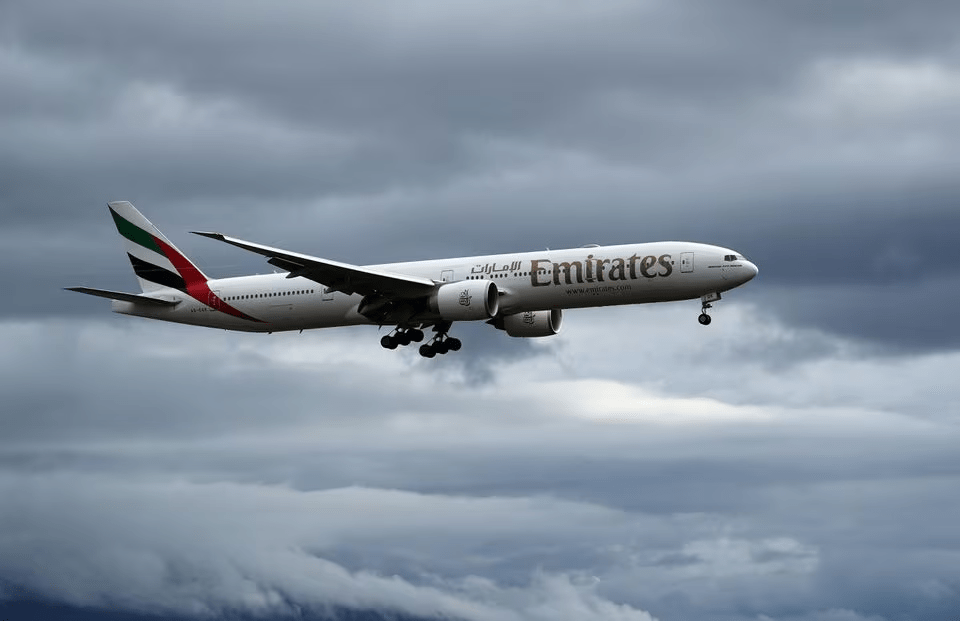
A Boeing 777-31H (ER) aircraft of Emirates airline lands at Cointrin Airport in Geneva, Switzerland December 3, 2018. Picture taken December 3, 2018
DUBAI, Nov 17 – A debate over engine performance has exposed a dilemma facing aerospace firms at this week’s Dubai Airshow – the hottest part of the jet market is also the hottest part of the world.
Airlines want to save on fuel and have the lowest possible maintenance costs. But those forces are pulling against each other in sandy or dusty environments like the Gulf and India.
“Therein lies the problem for Rolls-Royce and Airbus, because this is the region that is buying these airplanes and will buy them in big numbers if the engine issue is resolved,” Emirates Airline President Tim Clark told reporters this week.
The head of the world’s largest international carrier was speaking in the midst of negotiations to buy dozens of Airbus A350-1000 jets powered by Rolls-Royce’s XWB-97 engine, which have foundered for now over maintenance and pricing issues.
Emirates and Rolls papered over differences with a last-minute deal for a smaller quantity of the shorter A350-900, whose engine maintenance is seen as easier to predict.
The rare public dispute comes as engine makers want to be rewarded more for investments in new technology given the fuel savings they are offering to airlines on every mile of flight.
GE Aerospace set the tone under CEO Larry Culp. “We’ll still look to find opportunities to be paid fairly for the value that we create,” he told Reuters after half-yearly earnings in July.
Rolls-Royce CEO Tufan Erginbilgic, who took over in January this year, has indicated the company will no longer write unprofitable contracts for the sake of winning new deals, having already provisioned 1.4 billion pounds in loss-making contracts.
Critics say engine makers are paying for the hubris of past shows when they aggressively wooed airlines with conflicting promises of drastic fuel savings and trouble-free performance.
The airline industry, which operates on more slender margins than many of its suppliers, isn’t generally sympathetic.
“I really don’t want to have airplanes that are going to be breaking down all the time. I happen to be a service,” Emirates President Tim Clark told reporters this week.
Rolls-Royce said it was looking at ways of improving durability but denied its XWB-97 was “defective”.
At the heart of this week’s negotiation is a high-wire act between fuel efficiency and durability.
To achieve the fuel savings promised to airlines when the engines were sold, typically around 15-20%, they have to run hotter and push new materials to the limit.
But doing so imposes extra wear and tear.
Sand and dust can clog cooling holes and erode the leading edges of blades, reducing performance and forcing extra repairs.
That’s a problem especially for newer types of engine that tend to be sold using guaranteed service deals, delegates said.
INSURANCE-TYPE DEALS
While the visible face of engine makers is technology, the way they generate much of their income resembles insurance.
Jet engines are typically sold at a loss but their designers make money on repairs and servicing spread over 20 years.
Rather than charge for repairs as they arise, engine makers increasingly strike long-term deals priced by the flight hour, agreeing to swallow the cost of planned and unexpected outages.
“It’s an insurance policy,” an engine industry source said.
To airlines, it means having predictable costs.
To engine makers it means generating cash as soon as the engine enters service rather than waiting for shop visits.
Where those complex calculations have become increasingly unstuck is in the sandy or dusty areas of the Gulf and India.
With every “stack” of life-limited parts costing millions of dollars, accurately predicting how many such organ transplants each engine will need over the course of its life is vital.
An errant or maintenance-prone engine can become a financial time-bomb, said one industry executive. Emirates’ Clark said Rolls wanted to increase hourly pricing to adjust to such higher costs. Rolls-Royce declined comment on pricing.
Rolls now faces a quandary whether to invest more in the XWB-97 to help Airbus better compete with the Boeing 777X after Emirates ordered 90 more of the competing GE-powered planes.
Refusing to do so would underscore Erginbilgic’s tough stand on profitability for investors, but risk leaving part of the wide-body market to Boeing and GE, and upsetting Airbus.
Some analysts think the cash would be better used elsewhere.
“Rolls-Royce has ceased to chase market share at any cost: it has learned not to, and it no longer needs to,” Agency Partners analyst Nick Cunningham said.


 SVENFLY